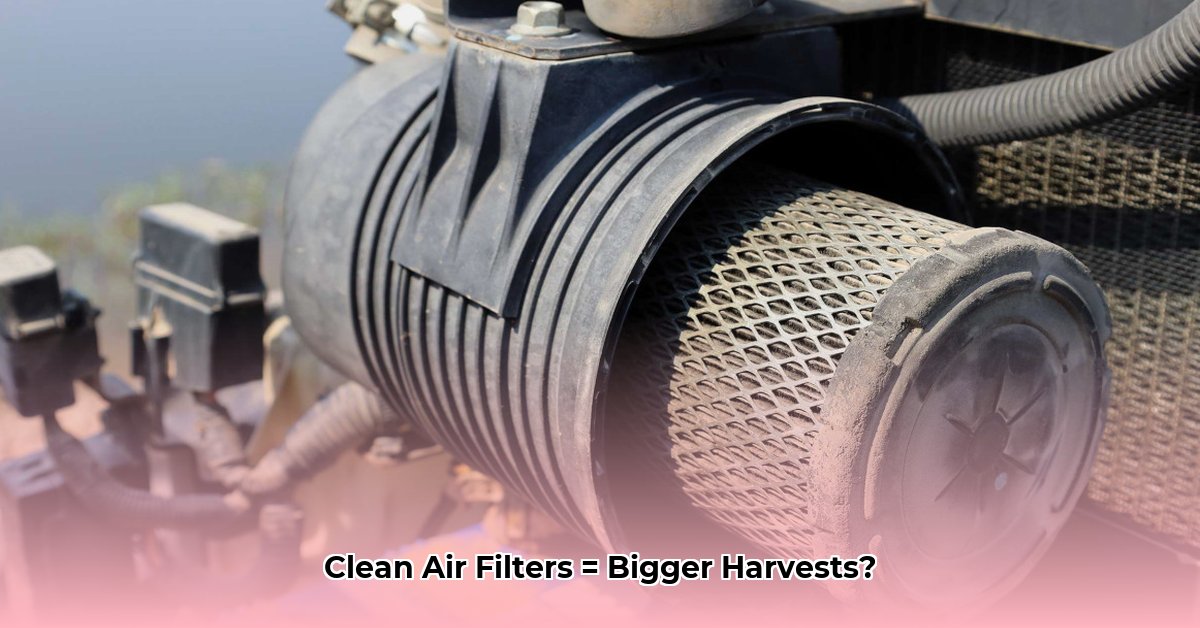
Identifying Your Tractor's Air Filters
Understanding your tractor's air filter type is the first step towards optimal maintenance. Different filter types offer varying levels of protection and require different maintenance schedules. Common types include:
Paper Panel Filters: These are widely used and relatively inexpensive, suitable for moderate dust conditions. They're typically made of pleated paper or cellulose and are designed for a single use before replacement. (Imagine a picture of a paper panel filter here)
Oil-Bath Filters: These filters use oil to trap dust and other particles. They are very effective in dusty environments but demand regular oil changes and filter element cleaning or replacement. (Imagine a picture of an oil-bath filter here)
Foam Filters: More common in older tractors, foam filters require frequent cleaning and offer less efficient filtration than other types. Best suited for cleaner operating environments. (Imagine a picture of a foam filter here)
High-Efficiency Particulate Air (HEPA) Filters: These premium filters are designed for exceptionally dusty conditions, capturing nearly all airborne particles. They're the most effective but also the most expensive and often require more frequent replacement. (Imagine a picture of a HEPA filter here)
For more detailed information on tractor air filters, check out this helpful resource: Air filter guide. Consult your tractor's manual to identify the correct filter type for your model. Knowing this allows you to select the appropriate replacement and follow the manufacturer's recommended maintenance schedule.
Filter Function and the Consequences of Neglect
Your tractor's air filter acts as a vital shield, protecting the engine from damaging particles like dust, dirt, and debris. What happens when you neglect air filter maintenance?
A clogged air filter restricts airflow to the engine, impacting performance in several ways:
Reduced Engine Power: Insufficient airflow leads to incomplete combustion, reducing engine power and efficiency. Have you noticed your tractor struggling to maintain its usual power lately? A dirty air filter might be the culprit.
Increased Fuel Consumption: The engine works harder to compensate for the restricted airflow, leading to increased fuel consumption and higher operating costs. This negatively impacts your farm's bottom line and increases your carbon footprint. Did you know that a clogged filter can increase fuel consumption by as much as 10%?
Accelerated Engine Wear: The presence of abrasive particles inside the engine causes premature wear and tear on vital components, reducing the engine's lifespan and leading to costly repairs. This directly contradicts the goal of sustainable farming practices.
Increased Emissions: Inefficient combustion from a clogged filter contributes to higher greenhouse gas emissions, harming the environment and contradicting sustainable farming principles.
Determining Optimal Air Filter Replacement Intervals
There's no one-size-fits-all answer for air filter replacement. The ideal interval depends heavily on factors such as operating hours, environmental conditions (dust levels), and the filter type itself. However, general guidelines can be helpful:
Paper Panel Filters: Inspect monthly and replace every 100-250 operating hours, or sooner if significant dust accumulation is visible.
Oil-Bath Filters: Inspect and clean, or change the oil every 25-50 hours, and replace the filter element as needed (frequency varies with usage and condition).
Foam Filters: Clean frequently (every 25-50 hours) and replace as the foam degrades or becomes too clogged to clean effectively.
HEPA Filters: Follow the manufacturer's specific recommendations, as these high-efficiency filters often require more frequent replacement.
Always refer to your tractor's owner's manual for the most accurate replacement intervals for your specific model. Regular inspections—at least every 50 operating hours—are crucial to catch potential problems early.
Choosing the Right Replacement Filter
Selecting the proper replacement filter is key to maintaining engine health and promoting sustainable farming practices. Consider these factors:
Quality: Higher-quality filters generally offer superior filtration and longer lifespan, minimizing replacement frequency. While initial cost might be higher, this often translates to long-term savings.
Cost: Balance the initial cost with the potential engine damage and repair costs associated with using a lower-quality filter. A slightly more expensive filter that lasts longer may ultimately prove more economical.
Environmental Impact: Look for filters made from recycled materials or that are easily recyclable at the end of their life. This reduces waste and promotes environmental responsibility.
Brand Reputation: Choose brands with a strong reputation for quality and reliability. Check online reviews to compare brands and models.
Step-by-Step Filter Replacement Guide
Safety First! Always power down the tractor and allow it to cool completely before beginning any filter replacement work. Wear appropriate safety glasses and gloves.
Locate the air filter: Consult your tractor's manual to pinpoint the air filter's location.
Prepare the new filter: Have the new filter readily available and unpack it.
Remove the old filter: Carefully remove the old filter, inspecting its condition to determine its effectiveness and to better estimate the next replacement interval.
Clean the housing: Use compressed air (or a suitable brush) to remove dust and debris from the air filter housing. A clean housing ensures a secure seal for the new filter.
Install the new filter: Gently insert the new filter, ensuring a proper and secure fit.
Check for leaks: Inspect the area around the filter for any air leaks.
Dispose of the old filter responsibly: See the next section for details.
(Include photos or videos demonstrating each step here.)
Proper Filter Disposal: A Sustainable Practice
Improper disposal of used air filters contributes to environmental pollution. Follow these sustainable disposal practices:
Local Recycling Programs: Check with local agricultural supply stores or waste management facilities for recycling programs. Many accept used oil filters and other automotive parts.
Responsible Disposal: If recycling isn't available, carefully seal the used filter in a plastic bag and dispose of it according to local waste regulations. This prevents the release of dust and debris into the environment. Never discard used oil filters in the regular trash without proper containment.
Remember, responsible filter disposal is a small but vital step toward sustainable farming practices. By following these guidelines, you contribute to a cleaner and healthier environment while ensuring efficient tractor operation.